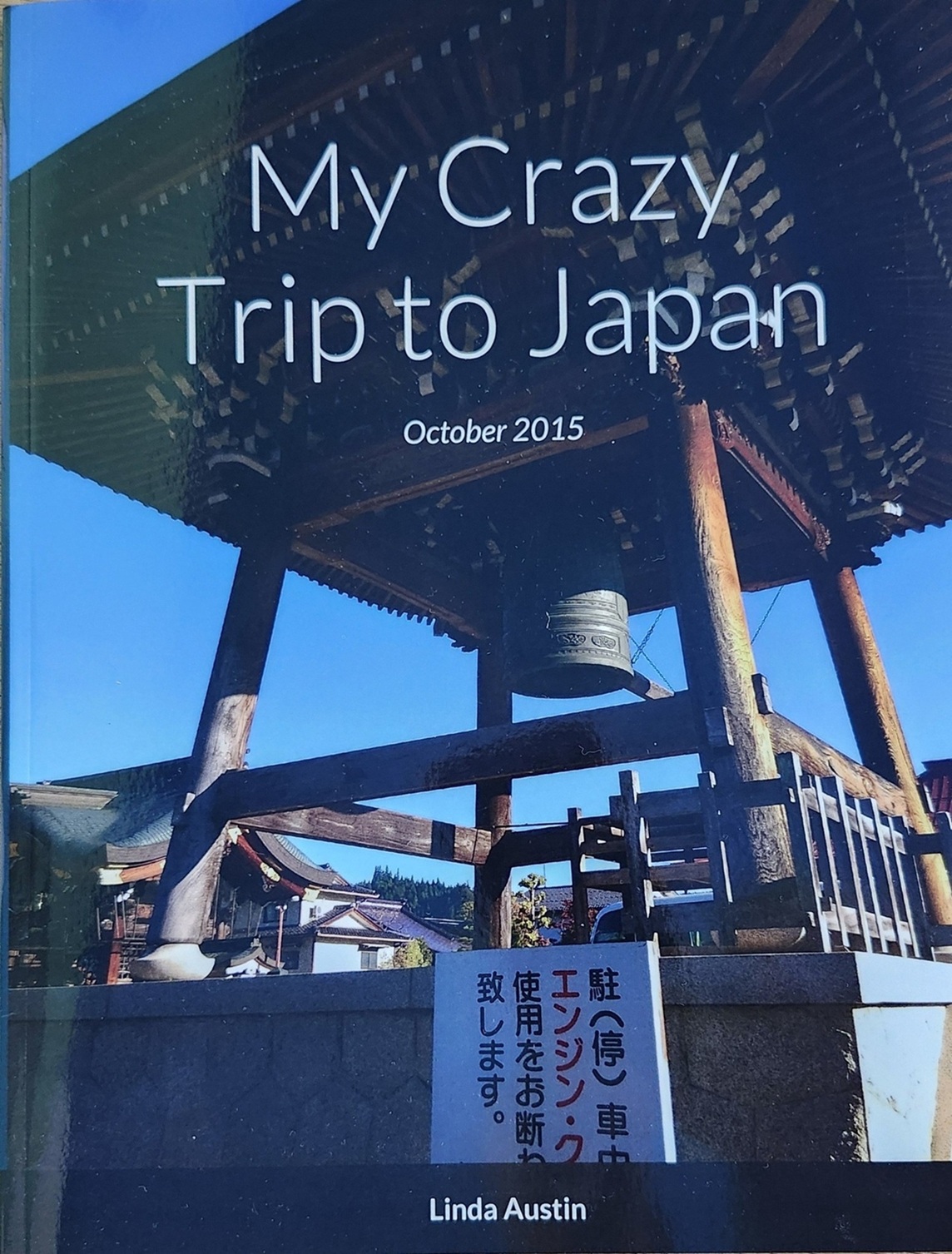
A journal is not usually meant to be a book, unless you start off writing it like one. Rather, most are notes and comments to yourself. But you can transform these notes and comments into an interesting book of stories of your travels. When my sister and I and our daughters went to Japan for a week and a half back in 2015, I brought along my printed itinerary full of details for us and kept a tiny spiral notebook of where we went on each day, sometimes adding short comments. After a few years of recovering from my exhausting challenge as tour guide with rudimentary Japanese language skills, I decided to make a memory book of this trip just for those of us who went, although my dad and a friend or two wanted copies and had a laugh reading My Crazy Trip to Japan which documented all the mishaps, being lost, we moms chasing after our speed-walking daughters else we get detached from our pocket WiFi signal, getting off at the wrong train station to meet non-English-speaking cousins for the first time . . . . I used Lulu.com to publish with option of no public sales.
I used my itinerary printout, brochures we picked up, online research, and my short notes along with my memory to write a flowing story that included cultural and historical details to give a bigger picture of what we did and where we went. I included a handful of photos that helped tell the stories of us. Photos are important because mostly they will be forgotten about unless they’re in a book.
Recently I worked typing up someone else’s travel journal that was actually written in a kind of story form documenting each day. Kudos to her! But still, as I typed and did research to make sure all the foreign place names were spelled correctly, I learned a lot about these places and suggested the person add more details for better description and understanding of significances. No need to stick rigidly with only what was written. While a travel memories book is mostly for the travelers, it could also be a fun read for children, grandchildren, and other family, including future generations, so adding explanations would be important. Write for your future readers! In this case, the lengthy time of multi-country travels with children was incredible and a whirlwind of adventures.
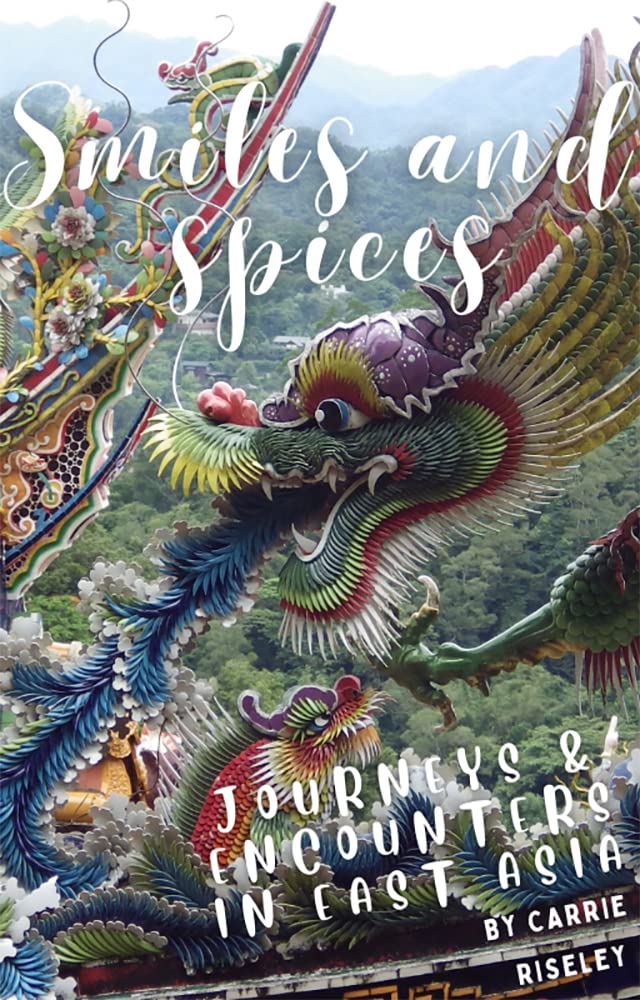
For a great travel memoir, read Carrie Riseley’s delightful Smiles and Spices: Journeys and Encounters in East Asia, or one of her other travel memoirs, while you relax in your comfy chair at home.
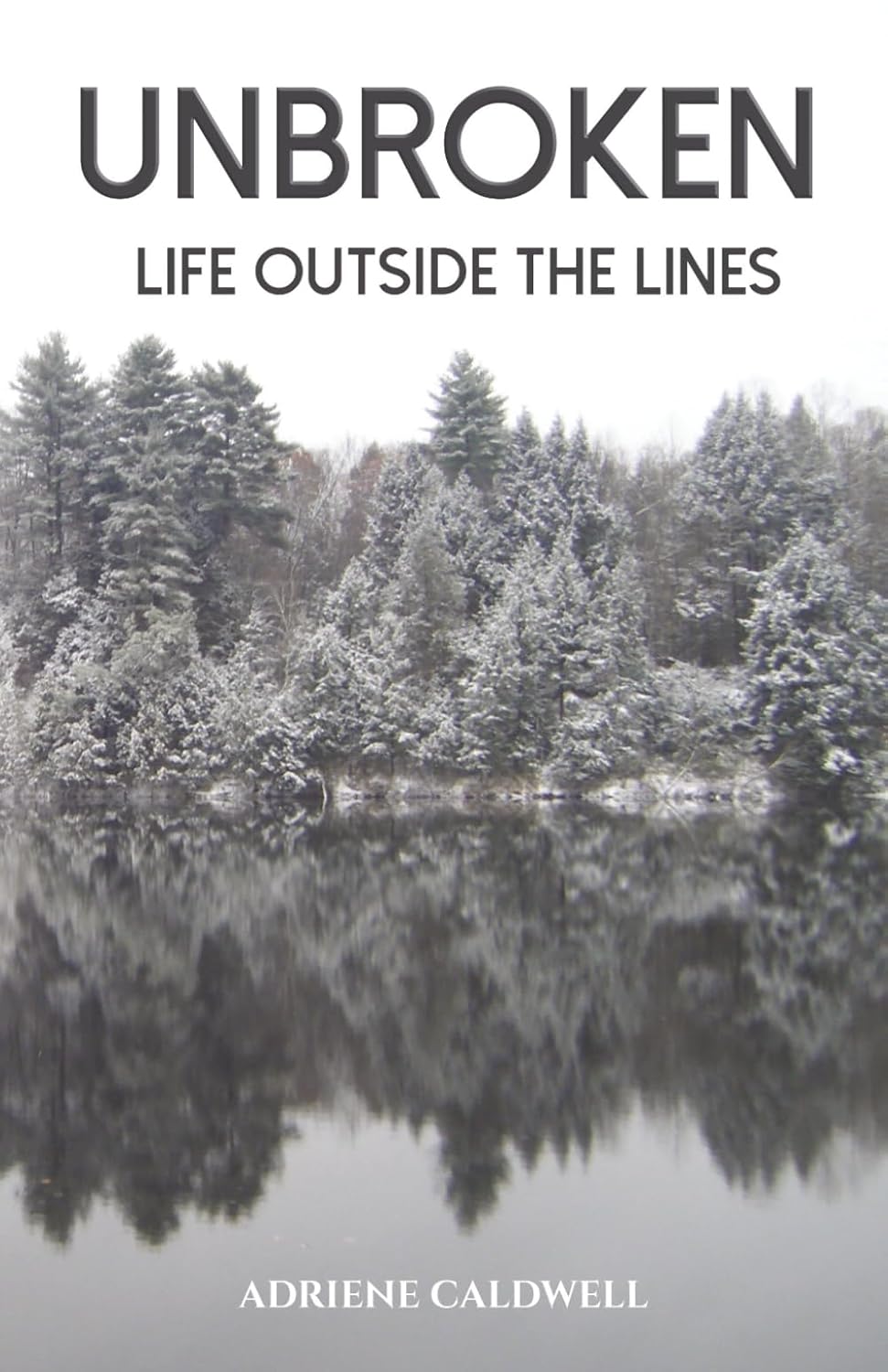
Adriene Caldwell has bravely written her memoir Unbroken: Life Outside the Lines, “a harrowing coming-of-age story defined by resilience in the face of unimaginable odds.” It is a raw, emotional read with disclaimers that it could trigger nightmares of the past and present in people affected by child abuse, including in foster homes or by being groomed. Adriene’s mother lived in extreme poverty and suffered from mental illness, and so Adriene suffered, too, especially from terrible beatings, and she tried to protect her baby brother, becoming as a mother to him until he was taken away. Abuse of any kind affects the way a person perceives themselves, especially when they have no outside support. Thankfully this story has a good ending, but so much bad happens it’s a wonder Adriene could eventually rise above it all.
I had some questions for Adriene about the writing of Unbroken, which can help others who dare to write about their trauma. Trauma affects mindset and behavior which can be passed onto future generations, so understanding the source can help to break the chain.
* * * * * * *
Adriene, I imagine Unbroken: Life Outside the Lines was a difficult book to write. What made you want to write your story and was it hard to re-live this part of your life? How did you get through it?
Writing this book was absolute hell. There were times when I didn’t think I could get it done. It was like ripping off scabs of wounds that never healed properly.
I wrote Unbroken with the hope that it would be a lifeline for others, a reminder that healing is possible even in the darkest moments. If someone can look at my journey and say,“If she went through that and made it to the other side, then I can handle my situation too,” then the struggle of writing every painful page was worth it.
Like Mary Karr (The Liar’s Club, Lit), you really laid open your life, including your own sometimes shocking choices. Was that scary—is that scary to share with others, whether family or strangers? How do you manage that emotionally? Has your daughter read your memoir?
I am absolutely terrified of the judgment I know will come. There will be critics and strangers who will have harsh things to say, and I’m bracing myself for that reality. My husband has kindly offered to filter the feedback and share only the positive, but I’m aware that social media will still be a challenge. The truth is, much of the criticism will sting because some of it will be valid. I made mistakes—many of them—and I’ve had to face that.
What I hold on to is that I’ve made a deliberate, heartfelt effort to reach out to those I hurt and offer sincere apologies. Not everyone has accepted, and that’s their right, but at least they know I’m remorseful and that I take responsibility for my actions. That acknowledgment, even when forgiveness doesn’t follow, matters deeply to me.
As for my daughter, she’s asked if I would be okay if she chose not to read the book. I told her yes, absolutely. She’s an adult now and has every right to protect her emotional boundaries. She doesn’t want to know every detail of what I lived through, and I respect that choice fully. Her well-being is far more important to me than her reading the memoir.
To what do you credit your ability to persevere and to overcome all this? Where did you find that “innate light that refuses to dim?” Do you still have bad days or moments and how do you deal with those?
Honestly, I credit God. He refused to allow me to die. As I share in the prologue, I pulled the trigger—twice—and yet I survived. That moment changed everything. I realized that death would not be an option for me, and if I had to stay alive, I had a choice: either live a self-medicated, tortured existence, or commit to the much harder path of pursuing forgiveness and hope. I chose the latter.
That doesn’t mean life is suddenly easy. I still have bad hours, bad days, sometimes even bad weeks. But I’ve learned how to navigate them with what I call my “Depression Rules.” It started as something I created for my best friend—who also lives with major depressive disorder—and myself. The rules are simple but vital: eat at least once a day, shower at least twice a week, sleep as much as you need. And above all, give yourself permission to feel what you feel, even to wallow in self-pity for a short while, but then draw a line, pick yourself up, and move forward.
It’s not perfect, and I’m not perfect, but these small practices help me keep moving toward healing rather than back into despair.
Ann Lamott wrote in Bird by Bird, “You own everything that happened to you. Tell your story. If people wanted you to write warmly about them, they should have behaved better.” Your one foster home “mother” is referred to not by name but by an unpleasant descriptive acronym. Did you change any other names—to protect the innocent or the guilty? If not, were you afraid of repercussions?
I changed all the names. Just because I am willing to tell my story does not mean I have the right to expose the stories of others. Their lives and choices are theirs to disclose, not mine. That said, I do not deign to give that particular woman—whom I refer to in the book as TBFH—a name. Out of everyone who failed me, she is the one person I have not yet been able to forgive. I sincerely hope that one day I will reach that place, but I’m not there yet.
You eventually escaped from your mother, breaking completely away, but can you explain why you later wanted to find her? Were you able to forgive? Did you ever contact her again?
After about a decade, I felt compelled to know what had become of my mother—whether she was okay, whether she was alive, or even if she had passed away. In time, I found forgiveness for her. She was sick, and I understand that now in a way I couldn’t as a child. What I also came to realize is that she made one of the most selfless sacrifices a mother can make: she gave my brother and me to the Smith family. The expectation was that we would both be adopted, and while things didn’t unfold as we hoped, her decision was still an act of love.
It’s only now, as a mother myself, that I can fully grasp the weight of that sacrifice. She knew she couldn’t provide the kind of life we needed, and so she gave us a chance at something better. That perspective has allowed me to forgive her and to see her through a more compassionate lens.
Who is the audience you wrote this for and what do you hope they get from your story? Is there anything else you’d like to say to other writers or readers?
I wrote this book for anyone who has struggled or is still struggling. My deepest hope is that readers will see themselves in my story and feel less alone, less ashamed, and more empowered to face their own pain.
I also hope that my book, alongside my website—which contains my Children’s Protective Services case files, psychiatric evaluations, monthly reports, and more—can be used in psychology and counseling curricula, especially in courses on early childhood trauma. There are many powerful childhood trauma memoirs, but very few that combine lived experience with the clinical documentation that shows what was happening behind the scenes. I believe that dual perspective—personal and professional—can make this book a unique tool for both healing and education.
To other writers, I would say: be brave. Your story matters. Don’t be afraid to bare your soul, because vulnerability is where connection begins.
To my readers, my hope is that this book gives you the strength and courage to face your past—or your present—with honesty and resilience. No matter how painful your situation may be, you can get through it. And remember, when I say, “It could always be worse,” I don’t mean that in a dismissive way. I mean it as a reminder to accept your circumstances, acknowledge their weight, but also recognize that survival is possible—and life beyond suffering is possible too.
* * * * * * *
Congratulations to Adriene for her challenging life and writing achievements. For more information about Adriene and her memoir, see www.UnbrokenCaldwell.com. Unbroken: Life Outside the Lines is available also in e-book format via Amazon.
Following are just some of the many memoirs to read for Asian American and Pacific Islander Month (May). Expand your knowledge and mind! Of course you can read any of these during any month, and there are many great fiction books, too, by Asian American authors. Fiction may not be truth, but can hold truths.
All You Can Ever Know by Nicole Chung: Nicole was born prematurely to Korean parents and was adopted by a white family. This is her struggle to search for identify.
Boat Baby: A Memoir, by Vicki Nguyen, tells of the author’s family’s desperate escape from communist Vietnam and her rise from refugee to NBC news anchor and correspondent.
Canton Elegy: A Father’s Letter of Sacrifice, Survival, and Enduring Love, by Stephen Jin Nom Lee. Stephen Lee with his US college degree found discrimination and racism and returned to China only to have his wife and children caught in the Japanese invasion, then the Chinese civil war. This is the story of their harrowing escape to the US, written in love for his children and grandchildren to know what was endured.
Every Day is a Gift: A Memoir, by Tammy Duckworth, daughter of an American father and Thai-Chinese mother. Duckworth and her parents fled worn-torn Phnom Penh, then struggled against homelessness in Hawaii. Her resilience helped her survive tragedy as an Army helicopter pilot and become a senator.
Speak Okinawa: A Memoir, by Elizabeth Miki Brina. Born to an Okinawan war bride and a Vietnam veteran father, the author’s story is about family and identity and understanding complicated parents.
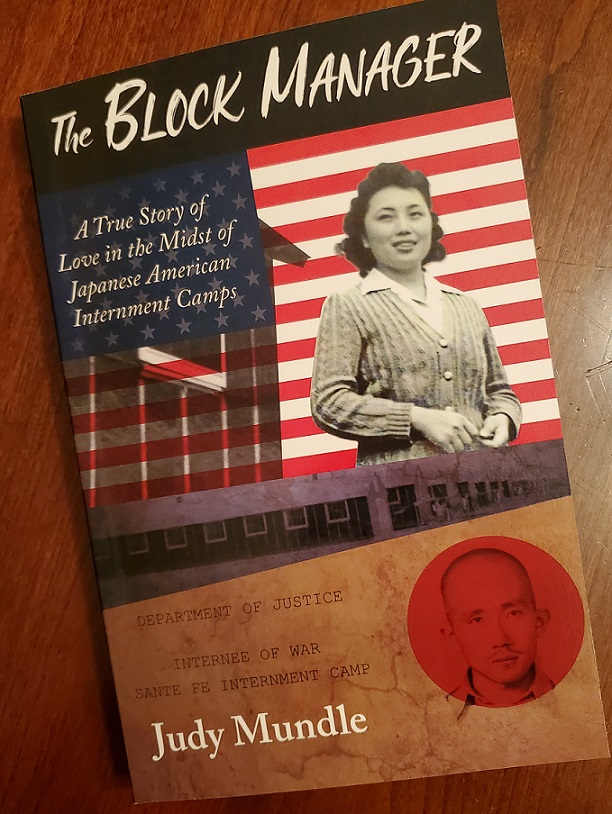
The Block Manager: A True Story of Love in the Midst of Japanese American Internment, by Judy Mundle is the story of her US-born Japanese friend who with her family was sent to US internment camps. “Janet” became a block manager, married, followed her husband to the Hiroshima area right after the war, enduring starvation and discrimination until finally able to return to the US.
The Song Poet: A Memoir of My Father, by Kao Kalia Yang, tells the story and culture of the author’s song poet father, a Hmong refugee from the American war in Laos.