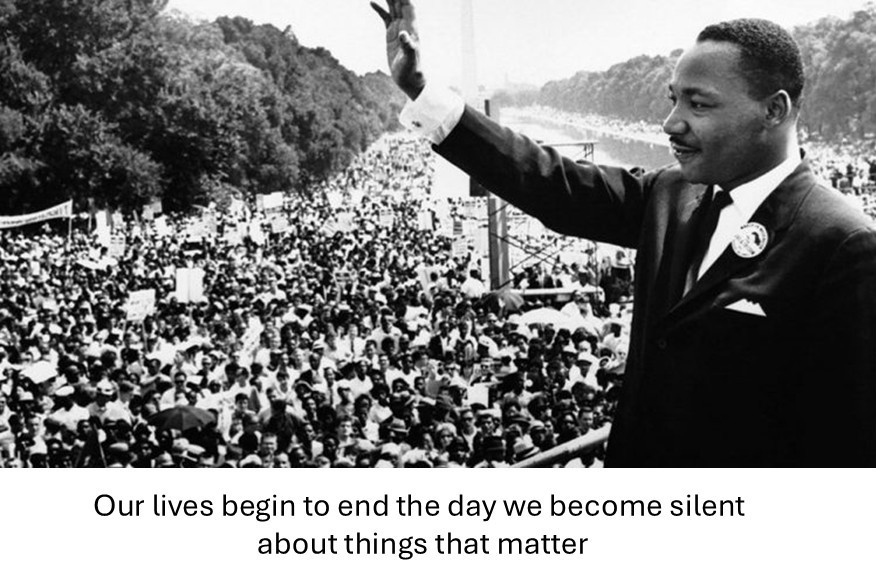
As Monday is Martin Luther King Jr. Day, it’s a good time to remember and think about a few of his quotes. His words are eternal for an ever-troubled world.
“Injustice anywhere is a threat to justice everywhere.”
“The time is always ripe to do right.”
“Darkness cannot drive out darkness; only light can do that. Hate cannot drive out hate; only love can do that.”
As you read and watch the news, what are you thinking? Life writing and memoir can include essays and stories of what is going on in the world around us, what we are thinking, what we are passionate about, what we wish to see for our and our children’s futures. You are in the midst of history happening all around, and your thoughts and lived experiences can be resources for your future generations to learn from. What was it like then, what did you do, they may wonder. Your voice can tell them what you lived through.
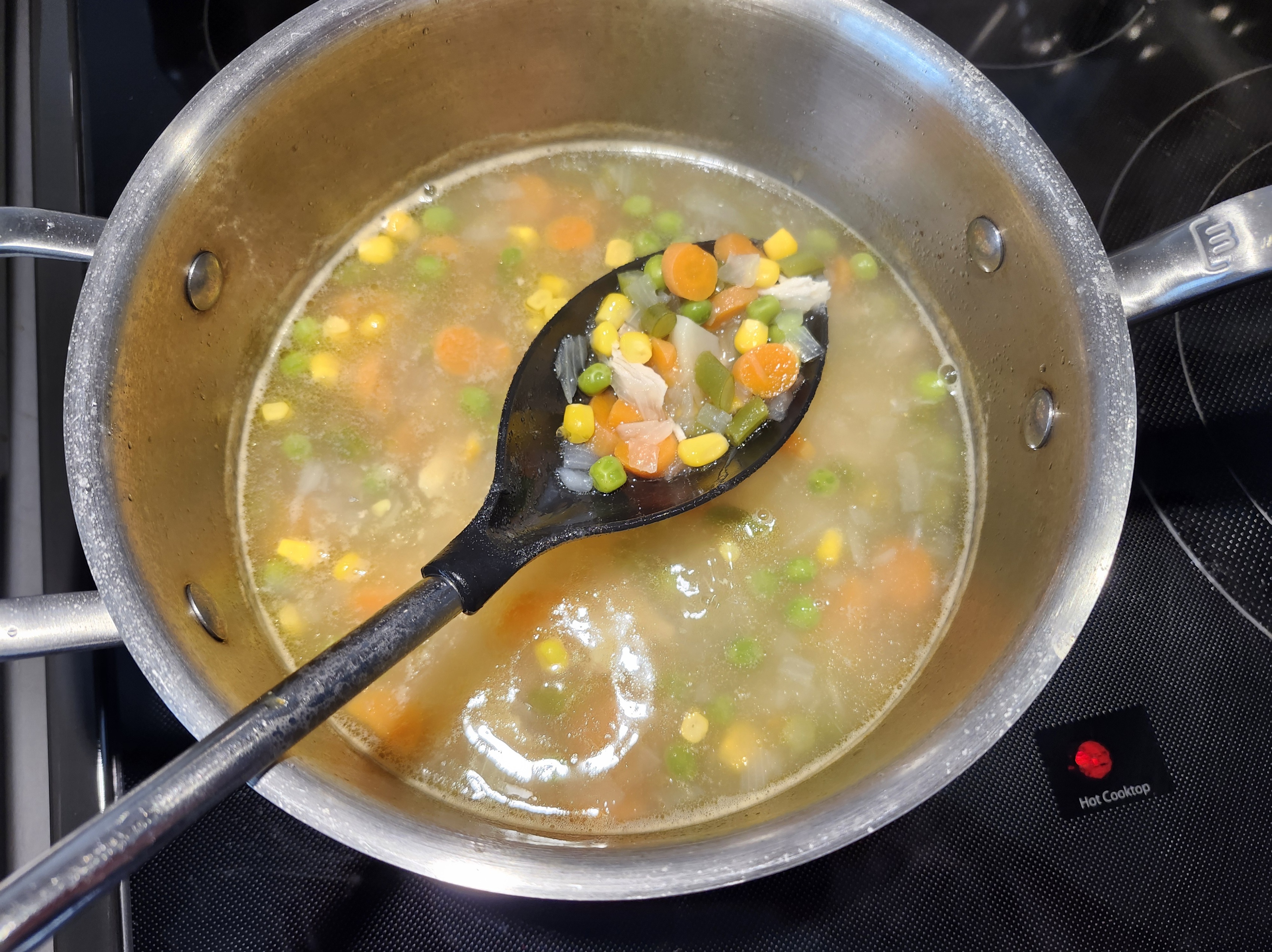
I fixed a variation of “Friendship Stew” the other day for a friend, to encourage her to eat. She’s thin as it is and now struggling with a serious health issue. This “stew” is like a meat and vegetable soup, but thickened by smashing some of the potatoes and peas. It comes from my husband’s family, when in the past the menfolk would gather at the small community center to make a huge vat of this to share among their rural families. They threw in beef and chicken together with vegetables they raised, cooking and stirring half the day. My mother-in-law canned jars of it and let us take some home. I loved this stuff and it is great food for the sick, also gluten free. I made some for a friend whose dad had terminal cancer and had little appetite, and he loved it. This stew freezes well, too, so I’ve frozen 2-cup servings to give to my friend who doesn’t eat much at a time.
I’m glad we have my mother- and father-in-law’s stories of growing up in the country, starting in the 1930’s. That kind of old rural lifestyle doesn’t exist here anymore and is such interesting history. My mom-in-law’s memoir includes some of her recipes like this Friendship Stew. She is known for her good cooking. I hope she makes boiled custard and coconut cake like she usually does when we visit around Christmas time. I bring her my family-traditional eggnog butter cookies, which she loves. I hope you are saving your family recipes – and the stories!
Chicken pieces (2 thighs or 1 breast) 1 onion, chopped Carrots, sliced 1 large russet potato, peeled and cut into chunks Butter beans (baby limas) or green peas Corn Canned tomatoes (optional) Broth
In a 2-quart pot, simmer the chicken in water, with pieces of onion and some celery leaves, until the meat is done, then cool and shred. Strain the broth and pour it back in the pot. Simmer the onion and carrots in a skillet with a little of the broth, just to soften, then add to the pot. Add butter beans, if using, and the potatoes. Add more broth (chicken or vegetable) to about 2/3’s of the pan. Simmer until the vegetables are well done. Add the peas, if using, the corn and a can of tomatoes (optional), and meat. Continue simmering until well cooked. Smash some of the potatoes and peas against the side of the pan to thicken the soup. Cook uncovered to reduce water—the mixture should not be too soupy.
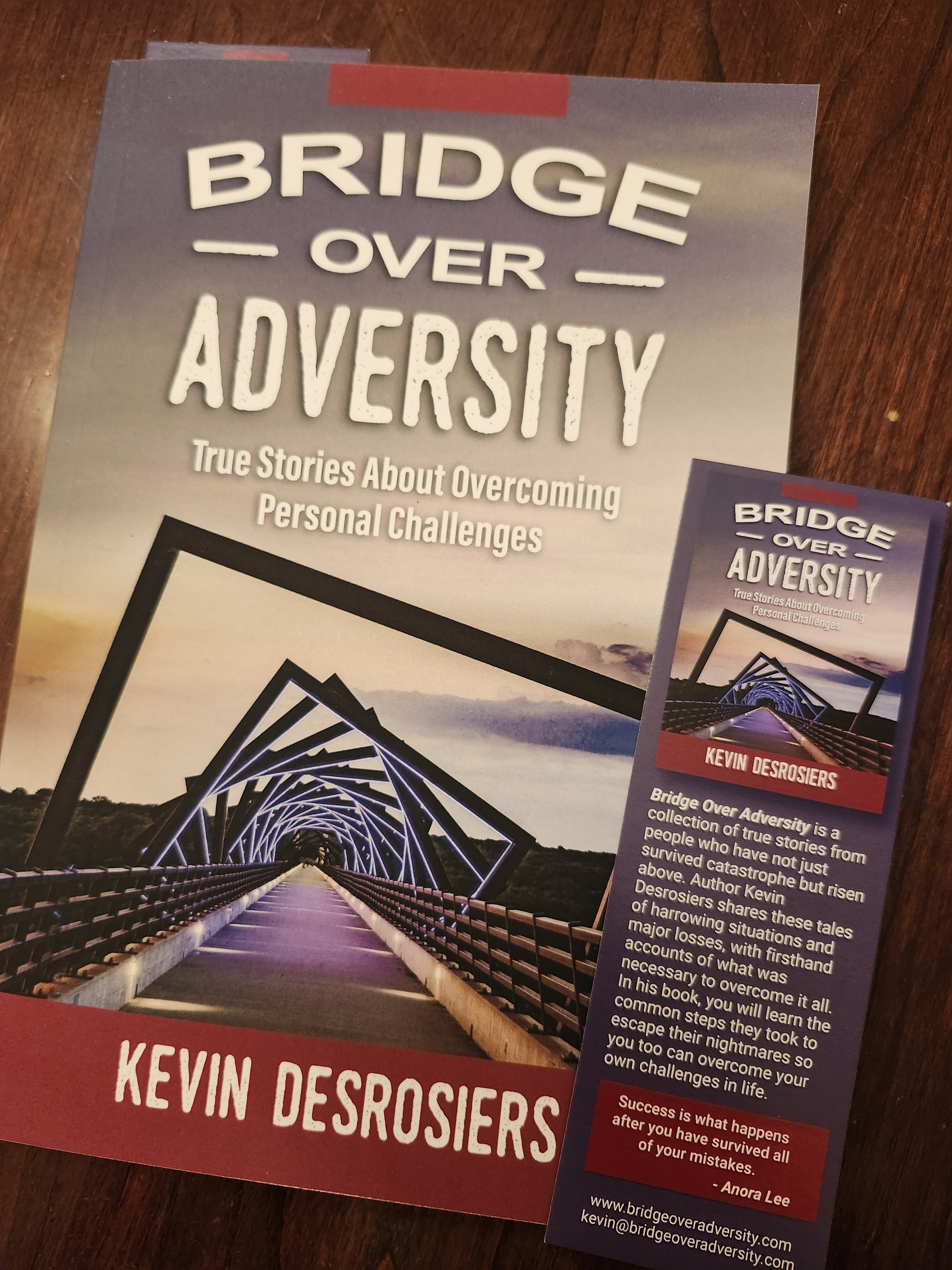
Recently I read Bridge Over Adversity: True Stories About Overcoming Personal Challenges by Kevin Desrosiers, whom I know through our local publishing group. As someone who encourages lifewriting, I enjoy reading about “regular” peoples’ lives and was curious about this book. It is meant to be inspiring and to bring hope, and I was impressed by the stories about overcoming big life challenges and obstacles, including some who had to change their whole lifestyle to become healthy, happy individuals ready to succeed in having a fulfilling life. If they can do it, so can you! At the end of each story Kevin added a few bullet points summarizing the qualities the person discovered they had that helped them overcome. They all had perseverance, but there’s more than that.
I asked Kevin what inspired him to write this book:
* * * * *
It was my parents who inspired the book. Originally it was going to be their story and written as a tribute to them. But as I talked to people about the book, several suggested including other stories about overcoming challenges in life so more people would be interested in and benefit from the book. As I did not know very many people facing challenges in life well, I reached out to my friends. I emailed about 15 people and asked them if they knew people that had faced and overcame challenges in their lives. I told them I was looking for a wide range of struggles such as addictions, legal issues, health issues, divorce, loss of loved ones, etc.
My friends came through better than I ever imagined. They connected me with 20+ people. I interviewed them all on Zoom and narrowed it down to 12 to get a good enough mix and stories that were interesting. After I sent the book to my beta* readers, there was one common thread, that I needed to establish credibility as someone who also faced challenges in life and overcame them. That is how my story became part of the book.
* * * * *
Maybe you have a story about how you overcame a challenge or a bad situation. Your story may inspire someone now struggling. Writing your story would also honor your perseverance in climbing your personal mountain, and it will give your family a new perspective about you and an appreciation of what you accomplished–and perhaps more understanding of what shaped you.
Kevin Desrosiers is a Distinguished Toastmaster and speaking coach who works with corporations, organizations, and individuals to help people improve their business and life skills. He also goes through methods to face life’s challenges, based on his book, Bridge Over Adversity.
* A beta reader is someone who agrees to read your book or story before it’s published and gives their impression and concrete suggestions to make it better, in their opinion. Usually this is not a close family member. Pick someone not afraid to give constructive critique for you to consider. Cheri Postill wrote an excellent book, How to Train a Beta Reader.



 moonbridgebooks